Smart parking and sustainable mobility: the role of car parks in cities
Smart parking plays an increasingly important role in sustainable urban mobility. Digital parking systems can show available spaces, simplify access and help operators manage capacity.
These capabilities can help reduce unnecessary journeys, improve traffic flow and support more efficient mobility planning.
But how do smart car parks actually contribute to more sustainable cities? We explore the technologies behind them and their impact on drivers, operators and public authorities.
What role does smart parking play in sustainable mobility?
Sustainable mobility depends on more than public transport, cycling and electric vehicles. It also requires effective management of parking and its relationship with urban journeys.
When drivers cannot find a space, they may drive around nearby streets or parking areas. This adds traffic, uses energy and may increase emissions.
A smart parking system provides occupancy information and helps drivers find available spaces. Parking can therefore become part of a wider mobility strategy aimed at making better use of existing infrastructure.
Less time searching for parking and less unnecessary traffic
Knowing availability before reaching a car park, or receiving directions to free spaces, can reduce searching and unnecessary driving.
This information is particularly useful in shopping districts, hospitals, stations and large facilities with high vehicle volumes.
Guidance systems help organise traffic inside a car park and, when availability data is shared with drivers, can also help them plan where to go.
The actual reduction in traffic outside the facility depends on factors such as location, demand and integration with the wider urban mobility network.
Making better use of urban space
Sustainable mobility also involves using the space available more effectively.
Occupancy, turnover and busy-period data help operators find unused capacity and plan for different users.
For public authorities, this information can inform decisions about parking allocation, traffic management and new infrastructure.
Which technologies enable smarter mobility?
Smart car parks combine hardware, software and real-time information to coordinate access, occupancy and available services.
Their contribution to sustainable mobility depends on how these technologies are integrated and the needs of each facility.
Parking guidance and real-time space availability
Parking guidance systems use sensors, illuminated indicators and information panels to detect and display available spaces.
This information helps drivers navigate the facility and distributes traffic more efficiently, reducing driving through fully occupied areas.
Occupancy data can also be analysed to understand demand and improve the allocation of spaces.
Automated access control
Number plate recognition, QR codes and other digital credentials can identify vehicles and automate entry and exit.
Parking access control systems can speed up vehicle movements and make it easier to manage reservations, subscribers and occasional users.
When correctly sized and configured, they can also reduce waiting times at entrances and exits and improve traffic flow.
Connected information and centralised management
Car parks generate information about entry, exit, occupancy, turnover and service usage.
Centralising these data helps operators assess performance and identify demand patterns, whether at an individual site or across a network of car parks.
Connecting different systems supports more coordinated management and provides information that can also contribute to urban mobility planning.
Car parks as part of electric mobility
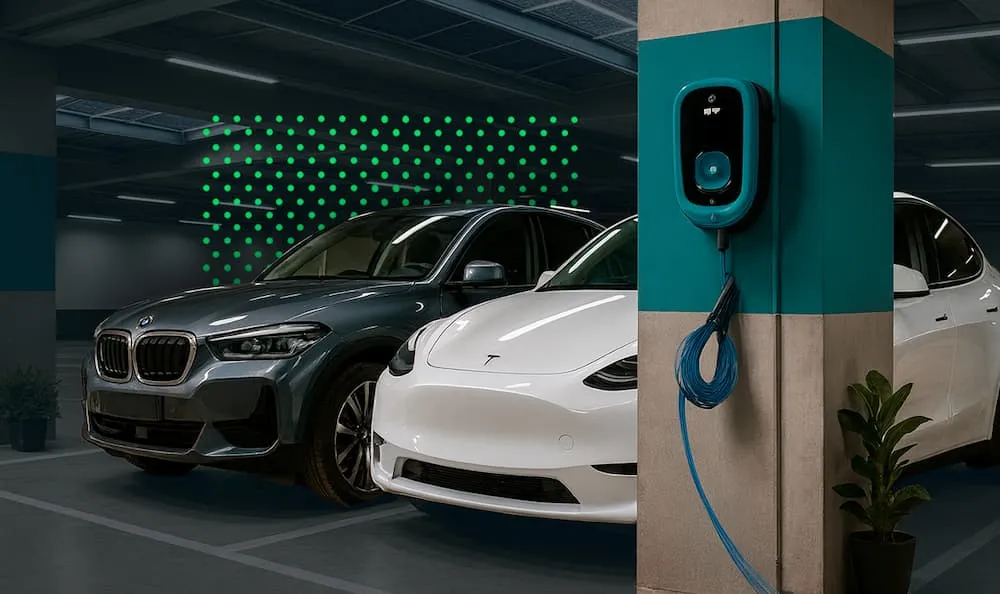
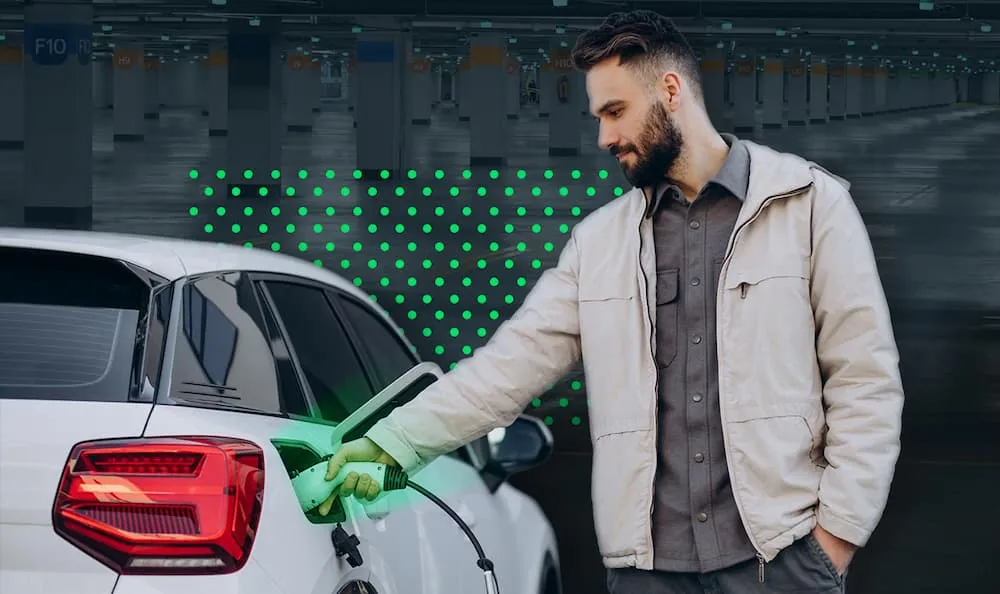
Parking facilities can support electric mobility by offering spaces where drivers charge their vehicles during their stay.
Installing electric vehicle charging points combines parking with an increasingly important service for EV drivers.
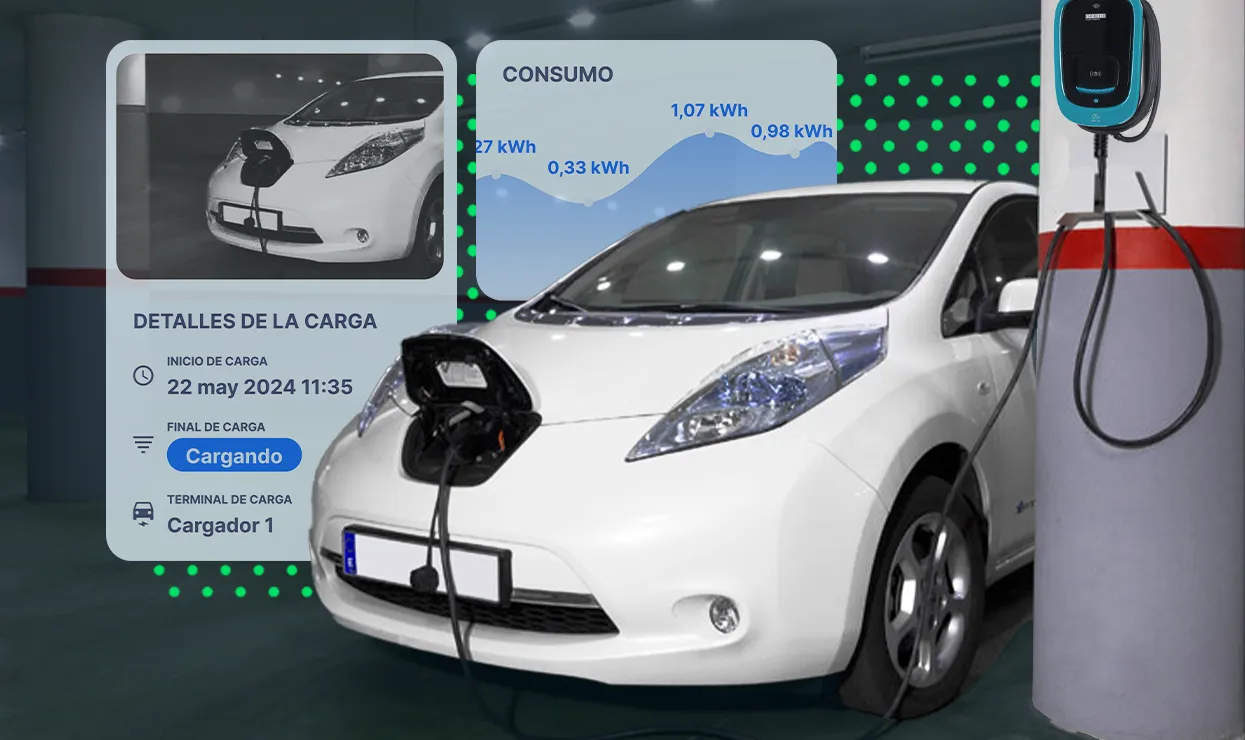
When charging is integrated into management systems, operators can monitor usage, oversee the service and allocate available power according to the facility's characteristics.
This information also helps plan future charging infrastructure expansion as demand changes.
How parking data helps plan more sustainable cities
Digitalisation turns daily car park activity into information that helps explain mobility patterns.
Indicators such as occupancy by time of day, length of stay, turnover and peak arrival periods reveal how parking infrastructure is used.
These data can help operators and public authorities to:
- Identify demand patterns: understand when and where parking demand is concentrated.
- Optimise space allocation: adapt availability for different user groups.
- Plan resources: adjust facility operations according to expected occupancy.
- Evaluate measures: analyse changes in parking use after new measures are introduced.
For these insights to improve urban mobility, they should be interpreted alongside traffic, public transport and travel-demand data.
Smart parking within a smart city
A smart city uses technology and information to improve how its services and infrastructure are managed.
In this context, car parks can evolve from isolated facilities into part of a connected mobility system.
Sharing availability information, linking car parks to other modes of transport and coordinating multiple facilities are examples of how parking can contribute to more organised mobility.
The goal is not simply to make it easier for vehicles to park but to use resources more effectively and encourage more efficient journeys.
Towards more connected and efficient urban mobility
Creating more sustainable cities requires combining mobility solutions and improving the management of existing infrastructure.
Smart car parks can contribute by providing occupancy information, facilitating access to available spaces and improving coordination between parking services.
At i+D3, we develop technology that connects parking guidance, access control and management systems, helping operators and public authorities run more efficient facilities and prepare for evolving mobility needs.
Want to improve the management of your car park? Explore our parking management solutions and discover how they can be tailored to your facility.