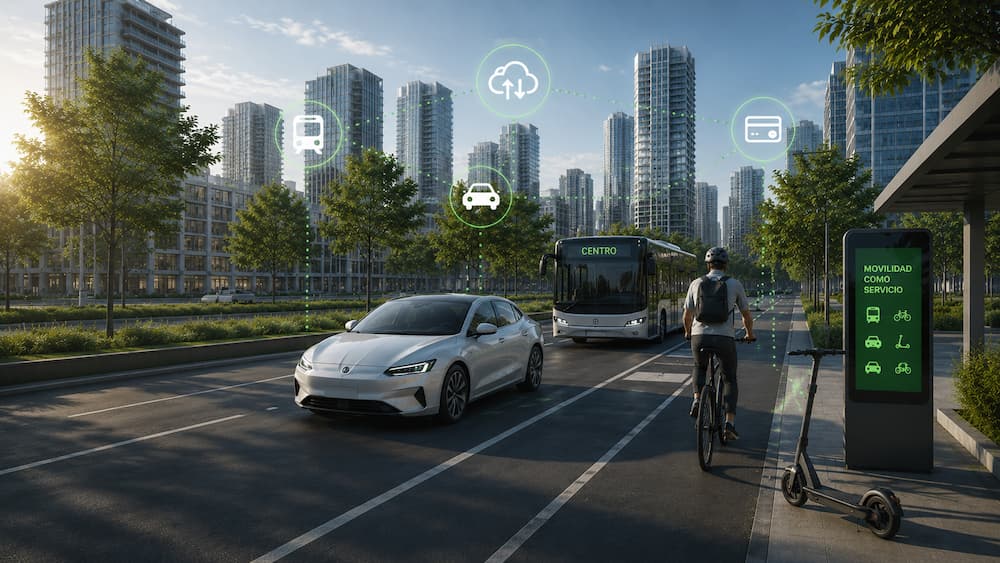
Unified mobility platforms: key features and benefits
Car parks, access systems, sensors and digital services increasingly need to share information.
Unified mobility platforms connect these tools and bring their data together. This makes separate systems easier to manage.
But how can systems from different providers be integrated? What information can they share? And what benefits does this model offer operators and public authorities?
This guide explains how connected mobility platforms work, why systems need to share data and what operators should check.
What are unified mobility platforms?
Unified mobility platforms connect different systems. They share data and help operators coordinate daily activities.
Their key feature is interoperability. This means apps, devices and services can share and use the same information.
An integrated platform can combine parking occupancy, vehicle access and online booking data in one place.
This simplifies operational monitoring and provides a more complete picture of connected infrastructure.
Which systems can be integrated into a mobility platform?
Integration needs vary according to the facility, available services and existing technology infrastructure.
For parking and urban mobility, some of the systems that can be connected include:
Access control and parking management
Access control systems record vehicle entries and exits using tickets, number plates or digital credentials.
When connected to other applications, these records can be linked to bookings, subscribers, payments and access permissions.
For operators with several car parks, integration makes it easier to monitor sites and manage users.
Occupancy sensors and smart signage
Occupancy sensors, counting systems and information displays help track parking availability and communicate it to drivers.
When shared with other systems, this information can be used to display free spaces, guide users and analyse parking demand.
Parking guidance systems demonstrate how physical devices and digital tools can operate together.
Mobile apps, reservations and digital payments
Mobile applications and online sales platforms allow customers to reserve spaces, purchase parking products or pay for stays through digital channels.
Integration with the facility connects commercial transactions with availability, access conditions and payment processes.
For example, an online booking can be linked to a parking stay and the access permissions required, provided the systems support that integration.
How mobility systems integrate through APIs
One of the main challenges of unified platforms is connecting technologies developed by different manufacturers and providers.
Application programming interfaces (APIs) allow software systems to exchange information through defined connections and rules.
For example, a parking management system can share occupancy information with an external app or receive reservations from a sales platform.
These connections can support:
- Information exchange: sharing data between applications without entering it manually into each system.
- Process automation: linking activities such as reservations, entry and payments.
- Centralised monitoring: bringing information from multiple facilities into one management environment.
- Service expansion: adding functions through compatible integrations.
An API does not guarantee that two systems will work together. Teams must agree on the data, access rights and technical rules for each connection.
Why interoperability and data security matter
For a unified platform to work well, connected systems must exchange information that is understandable, current and reliable.
This requires defined data formats, authentication mechanisms and synchronisation procedures.
It is also essential to determine which users and applications may access each category of information, especially when handling number plates, personal identifiers or transaction records.
Interoperability must go hand in hand with security safeguards and proper data management under applicable requirements.
What advantages do integrated platforms offer operators and public authorities?
Technology integration can overcome the limitations of isolated systems, particularly when managing multiple facilities or mobility services.
Its main benefits include:
- Comprehensive operational visibility: viewing information across facilities and systems.
- Fewer manual tasks: reducing duplicate data entry and coordinating processes.
- Better incident management: connecting events from different devices to identify and follow up on problems.
- Insights for decision-making: analysing occupancy, turnover, demand and service usage.
- Greater flexibility: introducing new applications or capabilities without necessarily replacing all existing infrastructure.
These benefits depend on the scope of integration, the quality of available data and the functions implemented in each project.
What to consider before unifying mobility systems
Implementing an integrated platform requires an assessment of both the existing technology and the processes that should be connected.
Five areas deserve attention before starting a project:
- Current infrastructure: identify the hardware, software and services already in use.
- Compatibility: establish which systems provide APIs or other integration methods.
- Information requirements: define what data must be shared and how frequently.
- Security and permissions: determine access, protection and data-processing requirements.
- Scalability: assess whether the architecture can support future facilities or services.
Replacing every existing system is not always necessary. In some cases, a well-defined integration can reuse part of the infrastructure while gradually connecting new capabilities.
Unified platforms and their role in smart cities
In a smart city, mobility infrastructure can exchange information to improve urban service planning and coordination.
Parking facilities contribute occupancy, access and usage data to this ecosystem.
Connections with municipal tools can improve monitoring across areas, demand-pattern analysis and resource planning.
However, a unified platform does not necessarily mean running every aspect of urban mobility through a single application. Its scope depends on the systems connected and the agreements governing information exchange.
The real value comes from enabling different technologies to work together.
Towards a more connected mobility ecosystem
The evolution of mobility platforms is not simply about introducing new technologies, but about helping existing systems communicate and generate useful information.
Interoperability, data integration and scalable architectures enable more coordinated management, from individual car parks to multi-site networks.
At i+D3, we develop parking hardware and software with API integration capabilities and connections to external platforms according to each project's requirements.
Want to connect and centralise your parking operations? Explore our parking management solutions and the integration options available for your facility.
Frequently asked questions about unified mobility platforms
What is the difference between a unified platform and parking management software?
Parking management software focuses on facility operations such as access, payments, bookings and subscriptions. A unified mobility platform has a broader scope and can connect information from different types of infrastructure and services.
Can systems from different manufacturers be integrated?
Yes, provided compatible connections exist and the necessary technical requirements are met. API availability, communication protocols and data access determine integration possibilities.
Do we need to replace equipment to unify management?
Not always. It depends on the compatibility of existing devices and software. Some projects can retain current systems while adding connections to new applications.
What role do APIs play in a mobility platform?
APIs enable information exchange between applications. For example, they can connect parking management systems to booking platforms, analytics tools or external applications, depending on available integrations.