Evolution of parking solutions in the last 20 years
In the last two decades, the mobility sector has undergone a profound transformation, driven by technological innovation and new urban needs. The parking management has gone from traditional systems with barriers to smart solutions that offer more efficient, secure, and sustainable parking solutions.
The evolution of parking lots in the last 20 years
In these 20 years, parking lots have stopped being simple functional spaces to become key elements of urban mobility. The incorporation of new technologies and the change in user habits have driven a profound transformation in their design, management, and use.In this way, at i+D3 we have been an active part of this evolution. Thus, we have developed innovative solutions that improve efficiency, sustainability, and user experience in parking environments.
From manual to automated in parking solutions
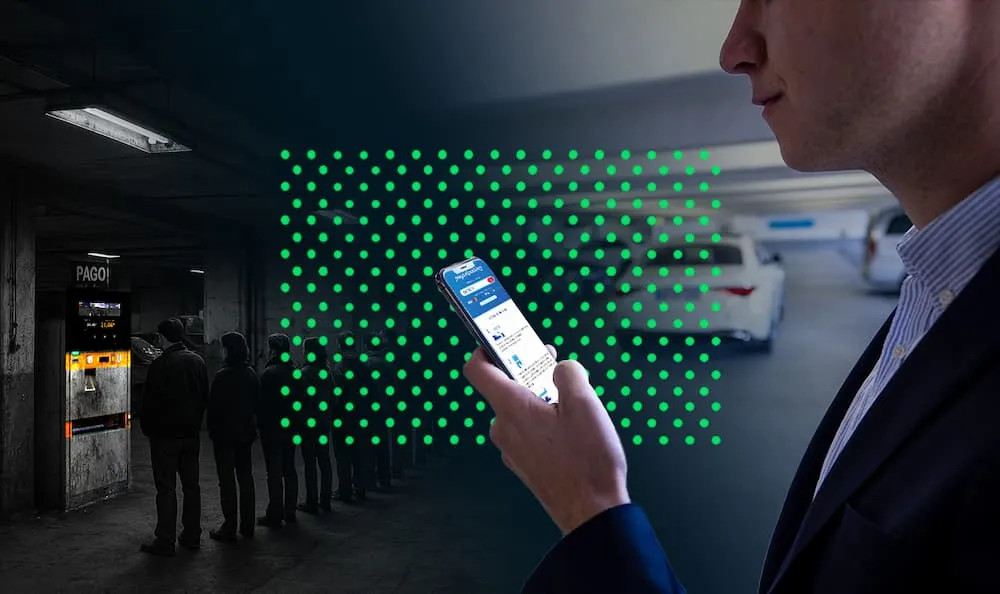
20 years ago, parking lots operated mainly with manual systems: paper tickets, cash payments, and physical barriers. The introduction of technologies such as occupancy sensors, guidance systems and electronic payments has revolutionized user experience. Likewise, they manage to reduce search times and improve operational efficiency.
Adaptation to larger vehicles
The increase in the average size of vehicles has posed challenges in existing infrastructure. Furthermore, according to the National Association of Automobile and Truck Manufacturers (ANFAC), vehicles have grown in dimensions. Meanwhile, parking spaces have remained practically unchanged, generating space and maneuverability problems.
Integration of emerging technologies
The implementation of license plate recognition systems (LPR), mobile applications for reservation and payment, and digital parking solutions has improved security and convenience for users. These advances allow for more efficient management and a better user experience.
Current trends in parking solutions
Below, we will explore current trends in smart parking lots and how they are shaping the future of urban mobility.
Sustainability and energy efficiency
To begin with, the installation of solar panels in parking lots has become a growing trend. Especially, in European countries like France and Germany. There, regulations require the coverage of large parking areas with solar panels to boost sustainable mobility. In Spain, although there is still no state regulation, some regions and companies are adopting these solutions to promote decarbonization.
Integration with urban mobility
Parking lots are evolving towards mobility hubs. Therefore, they offer additional services such as charging points for electric vehicles, pick-up areas for e-commerce and connections with public transport. Thus, this transformation seeks to reduce congestion in urban centers and promote more sustainable transport alternatives.
User experience and personalization
Technology is improving user experience in parking lots. From reservation systems and contactless payments to digital platforms that simplify the parking process. In this way, the focus is on making the process more comfortable and efficient.
The future of parking lots: what to expect from parking solutions?
Total automation
It is expected that the parking lots of the future will be completely automated, using artificial intelligence to manage reservations, payments, and space allocation. Autonomous parking systems are in development and could become a common reality in the coming years.
Connectivity and data integration
The integration of technologies such as the Internet of Things (IoT) and artificial intelligence will allow for more efficient management of parking lots, facilitating the collection and analysis of data in real time to optimize space use and improve user experience.
Focus on sustainability in parking solutions
The trend towards sustainability will continue, with a greater emphasis on reducing emissions and promoting alternative means of transport. Parking lots will be designed to integrate into greener and more accessible urban environments, contributing to the creation of more livable cities.At i+D3, we are committed to innovation and the development of solutions that respond to the changing needs of urban mobility. Through the implementation of advanced technologies and a focus on the user, we seek to transform parking lots into smart, sustainable spaces adapted to the future.For more information about our solutions and projects, visit https://imasdetres.com/.