How to improve residential garage security and prevent theft
Theft in residential parking garages is a concern for residents and property owners. Automatic doors, keys and remote controls help limit vehicle entry. But they do not always prevent unauthorised access.
Garage security depends on four areas:
- The condition of doors and other infrastructure.
- How users are identified.
- How access permissions are managed.
- How entries and exits are monitored.
Alongside preventive measures, technologies such as number plate recognition and mobile access are becoming increasingly useful.
We explore ways to improve the security of shared residential garages and the role of 3Garage, developed by i+d3 to digitalise access control.
Why can theft occur in shared residential garages?
Residential garages usually have systems that restrict vehicle entry, but certain vulnerabilities remain.
One challenge is keeping access permissions up to date. Lost remotes, unreturned keys and active credentials from former residents can create risks.
Automatic doors can also create risks. If they remain open longer than necessary or do not close properly, unauthorised people may enter.
Without access records, it is harder to understand what happened during an incident.
A closed door is an important initial security measure, but it does not replace proper management of access permissions.
How can theft be prevented in residential garages?
Improve security through three areas: physical protection, clear access procedures and suitable technology.
Control who is authorised to enter
Keep an up-to-date list of people and vehicles allowed to enter.
Building managers should update permissions whenever ownership changes, a tenancy ends or an access device is lost.
Digital systems can link access rights to specific vehicles or credentials. Managers can update these rights without relying only on shared keys or remotes.
Check pedestrian entrances and door closure
Security extends beyond vehicle entry. Pedestrian doors, entrances from the building and emergency exits must also be considered.
Locks, automatic mechanisms, closers and safety devices should be inspected regularly.
Where pedestrian access needs to be restricted, pedestrian access control systems using compatible credentials can be installed.
Improve lighting and CCTV
Suitable lighting improves visibility on access routes, at entrances and in less frequently used areas.
CCTV cameras can monitor critical points and provide information when investigating incidents.
Installation must comply with applicable regulations and obtain the required permissions in shared residential spaces.
These measures complement access control rather than replace it.
3Garage: access control using number plates and mobile phones
To address residential garage security needs, i+d3 developed 3Garage, a solution designed to reduce exclusive reliance on keys and remotes through digital identification.
It combined number plate recognition, Bluetooth and authorised vehicle management to improve entry and exit control.
Automatic number plate recognition
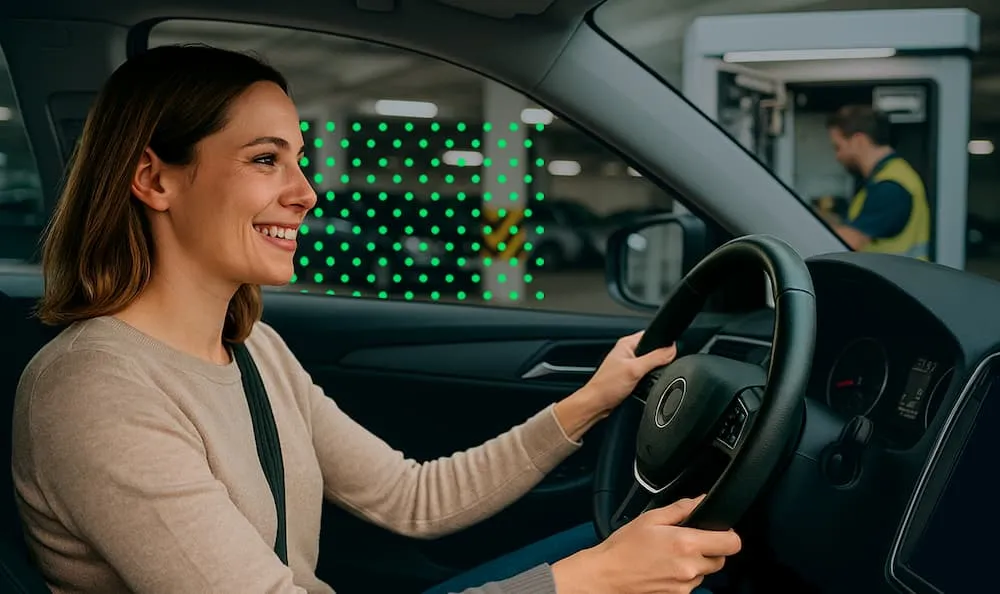
3Garage used licence plate recognition (LPR) cameras to identify vehicles requesting garage access.
The detected plate was checked against the register of authorised vehicles.
When a plate with valid permission was recognised, the system could trigger the door or barrier to open.
This automated entry without requiring drivers to use a physical remote each time.
Opening the door using Bluetooth
Another 3Garage feature was the ability to use a mobile phone for access.
Bluetooth enabled drivers to interact with the opening system rather than relying exclusively on a traditional key or remote.
This offered convenience and expanded identification options for garage users.
Access records and permission management
Garage administrators could register authorised vehicles in advance.
Linking permissions to number plates enabled managers to control who could enter and review logged activity.
This information helped monitor vehicle movements and investigate potential incidents.
What security benefits does digital access control offer?
Compared with traditional methods, the main advantage is not just how the door opens, but the ability to manage permissions and access records.
A properly configured system can provide:
- Greater control: allow or restrict entry according to registered vehicles and users.
- Better traceability: review movements identified and recorded by the system.
- Permission management: update authorisations when garage users change.
- Greater convenience: provide alternatives to conventional keys and remotes.
However, access control should not be confused with complete theft prevention.
Number plate recognition identifies vehicles, not drivers. It can make mistakes. Someone may also follow a vehicle through an open door.
No identification system can guarantee that theft will never occur. Effectiveness also depends on facility design and additional safety measures.
What should be considered before installing access control?
Before introducing technology, assess how the garage is built and operated.
Important considerations include:
- Users and vehicles: determine how many residents need access and whether spaces are shared or temporary users need permission.
- Existing infrastructure: review doors, barriers, automation and integration options.
- Identification methods: consider number plates, mobile phones, cards or other credentials according to residents' needs.
- Incident handling: decide what happens if plate reading fails, connectivity is lost or equipment breaks down.
- Permission administration: establish who may grant, change or revoke access.
The goal is a system that makes everyday garage management easier without creating unnecessary complexity for residents.
Number plate recognition, cameras and data protection
Security systems in residential garages also raise privacy considerations.
Images and number plates linked to identified or identifiable individuals can be personal data, so their processing must comply with data protection law.
CCTV in shared spaces may require approval from the owners' association. Signs must clearly identify the cameras. Only authorised people should access recordings.
Processing purposes and suitable retention periods must also be defined.
The Spanish Data Protection Agency provides specific guidance for residential communities and garages.
Frequently asked questions about residential garage security
Does number plate recognition help prevent theft?
It can help reduce unauthorised entry by identifying registered vehicles, but does not replace surveillance, properly closing doors or monitoring pedestrian access.
Can a residential garage be opened from a mobile phone?
Yes. Compatible systems support mobile opening technology, depending on installed devices and accepted identification methods.
Must remote controls be eliminated?
Not necessarily. Several access methods can coexist according to the facility's needs, equipment compatibility and permission management.
Is it legal to install cameras in shared garages?
Yes, provided applicable requirements are met. Shared areas require the relevant approval from the property owners and compliance with data protection obligations.
Towards safer, more connected residential garages
Garage security does not depend on one technology but on combining controlled access, well-maintained facilities and suitable procedures.
Solutions such as 3Garage reflect the evolution from conventional keys and remotes to digital identification and access records.
At i+d3, we continue developing access control technology for various types of parking facilities, including private and residential garages.
Want to improve access control at your garage? Discover our parking access control solutions and explore the options suited to your facility.