


How to manage parking during high-attendance events
Stadiums, concerts and major events create a challenge for car parks: many vehicles arrive and leave within a short time.
At most car parks, arrivals are spread throughout the day. Events are different: many vehicles arrive before they begin and leave at once afterwards.
Managing event parking therefore involves more than payment machines and access barriers.
Advance bookings, occupancy monitoring, automated access and multiple payment options can improve operations and the visitor experience.
Here is what to consider when managing high-demand event car parks.
What makes event parking difficult to manage?
Plan entrance lanes and available spaces around arrival and departure peaks.
Key challenges include:
- Simultaneous arrivals: many visitors try to enter during the same period.
- Entrance and exit congestion: identification and payment operations can cause queues.
- Occupancy control: managers must know availability and avoid overselling capacity.
- Different user groups: general visitors, subscribers, staff, guests, media and others may require separate access.
- Changing operations: the same car park may work differently on event days and ordinary weekdays.
These situations should be addressed before the event begins.
Solutions for optimising access during events
Technology helps organise the process from initial booking to departure.
1. Advance bookings to manage demand
Booking ahead helps visitors plan their journey. It also gives operators an early view of demand.
Digital platforms support advance space sales for matches, concerts and other activities.
Depending on configuration, operators may set event-specific access conditions, validity periods and booking capacity.
For example, a car park near a stadium may sell bookings for individual matches with arrival windows adapted to the event.
This helps allocate available spaces and reduces reliance on walk-in sales at peak times.
2. QR code and number plate access
After booking, drivers need a way to identify themselves at the entrance.
Digital systems may use QR codes, licence plate recognition (LPR) or other credentials.
Where ANPR is installed, the system can check that a recognised vehicle holds a valid reservation and authorise entry.
QR codes may also be checked at entrance terminals or on staff-operated devices.
The choice depends on the venue, available lanes and planned operations.
These tools cannot remove every queue. The number of lanes, clear signs and traffic flow also matter.
3. Occupancy and availability control
A major risk at events is exceeding available parking capacity.
Online sales, existing bookings and spaces assigned to other users must be coordinated.
Management systems can apply quotas and monitor operations related to each event.
Different rules can be configured for staff, subscribers, invited guests and general visitors.
This allows capacity to be reserved for particular groups while the remaining spaces are offered for sale.
4. On-site sales and mobile validation
Even with advance booking, some customers arrive without reservations.
At suitable facilities, handheld terminals allow staff to manage these cases without relying solely on fixed payment points.
Depending on the configuration, they may validate credentials or process on-site operations.
This complements automated access with assistance at busy locations.
On-site sales must remain subject to real parking availability.
What role do automatic pay stations play at events?
Automatic parking pay stations have traditionally been important for collecting parking fees without staffed payment desks.
They allow visitors to pay independently using supported methods.
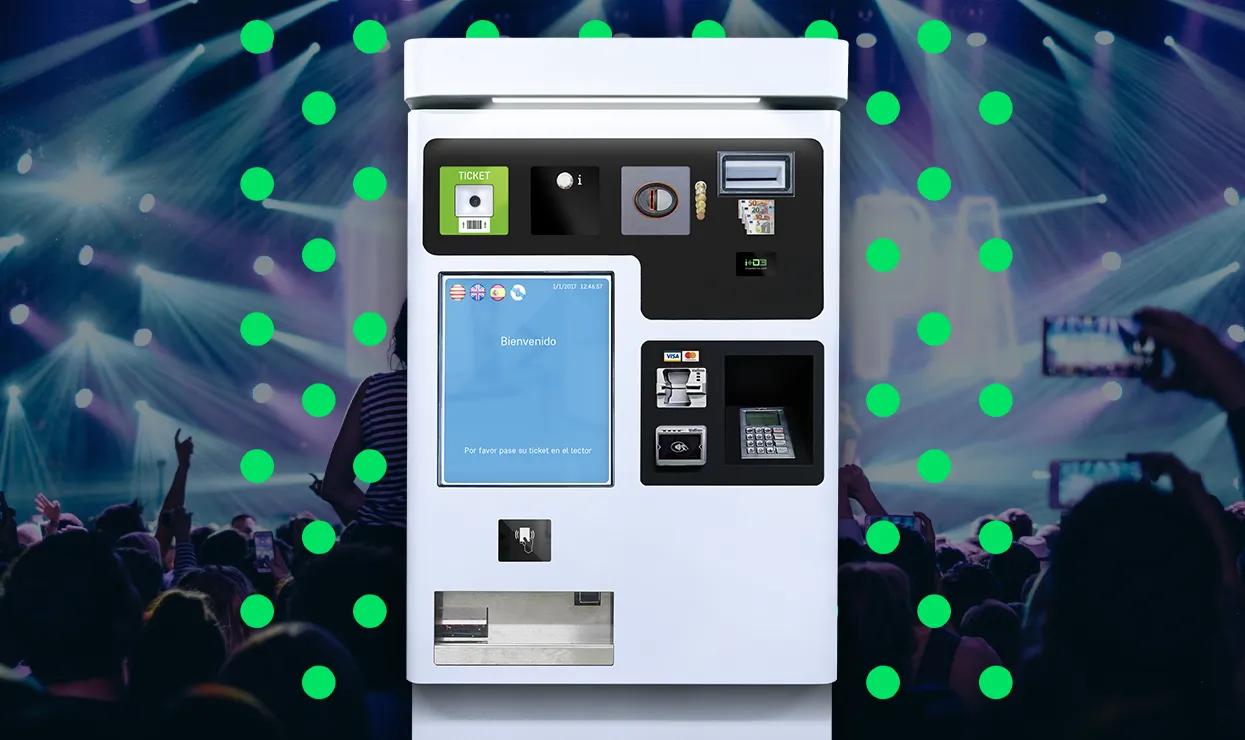
Depending on configuration, i+d3 equipment may accept cards, cash and contactless payments and include intercom assistance.
But where most vehicles depart within minutes, a physical pay station is only one part of the system.
Different channels can work together:
- Advance booking and payment: parking is purchased before arrival.
- Automatic pay stations: a physical payment option inside the venue.
- Mobile payment: some stays can be paid for without visiting a machine.
- Assisted payment and validation: support for specific situations.
The right mix depends on demand, accepted payment methods and available resources.
See the current specifications of our automatic parking pay stations.
Organising parking before, during and after an event
Alongside appropriate equipment, each stage needs a defined procedure.
| Stage | What the operator should prepare |
|---|---|
| Before the event | Define quotas, schedules, reservations, tariffs and authorised users. |
| During arrivals | Validate access, monitor occupancy and resolve incidents. |
| During the event | Supervise the facility and prepare departure procedures. |
| At the end | Organise exit lanes and make stay validation easier. |
| Afterwards | Review occupancy, sales, incidents and transaction times. |
Planning helps identify issues before they disrupt visitors.
For some venues, it may be useful to allocate more lanes to entry before the event and change the layout to accommodate departures afterwards.
Any such change requires prior assessment of infrastructure and safety conditions.
A real example: event parking management with i+d3
i+d3's experience illustrates how event parking has evolved beyond automatic fee collection.
One documented example is Deportivo Toluca in Mexico, where event-specific parking reservation capabilities were developed for football matches.
Project documentation from 2024 describes advance bookings, QR identification, multiple user categories and access conditions suited to different events.
Season ticket products were also developed to allow parking bookings across several matches using a common credential.
It illustrates the shift from ticket- and machine-centred operations to connected booking, authorisation and capacity management.
This is a documented project example, not a standard configuration applicable to every facility.
How to measure event car park performance
Reviewing operations after each event helps improve the next one.
Key indicators include:
Occupancy: spaces used as a percentage of available capacity.
Advance bookings: spaces sold before the event compared with on-site sales.
Entry time: average time required to identify vehicles and authorise access.
Exit concentration: vehicles leaving during peak departure periods.
Incidents: problems involving bookings, credentials, entrances or payments.
Revenue: sales generated by different parking products.
These metrics reveal what worked and which processes need improvement.
Frequently asked questions about event parking management
How can queues be reduced during a concert?
Combine advance bookings, fast identification, clear signage and suitable lane allocation. Plan exits and provide assistance for unexpected issues.
Can parking spaces be sold for specific events?
Yes. Booking platforms can sell spaces for particular events with access rules configured for each facility.
Are automatic pay stations necessary?
Not always. Physical machines may be combined with advance payment, mobile payment or staffed terminals. The choice depends on operating requirements.
Can visitors, subscribers and staff have different permissions?
Yes, where the management system supports different categories and access permissions. Available options depend on installed features and integrations.
Can a car park operate differently on event days?
Yes. Different procedures can be configured for normal days and peak events, provided equipment, software and facility design support them.
Prepare your car park for high-attendance events
Event parking requires coordinating entrances, bookings, capacity and payments to handle concentrated demand.
Automatic pay stations remain useful, but modern systems complement them with online booking, digital identification and monitoring tools.
At i+d3, we develop stadium parking systems for busy venues. Each solution can combine access equipment, online bookings and payment options to suit the site.
Does your car park experience large visitor surges during events? Discover how we can help organise access, manage availability and improve the visitor experience.


